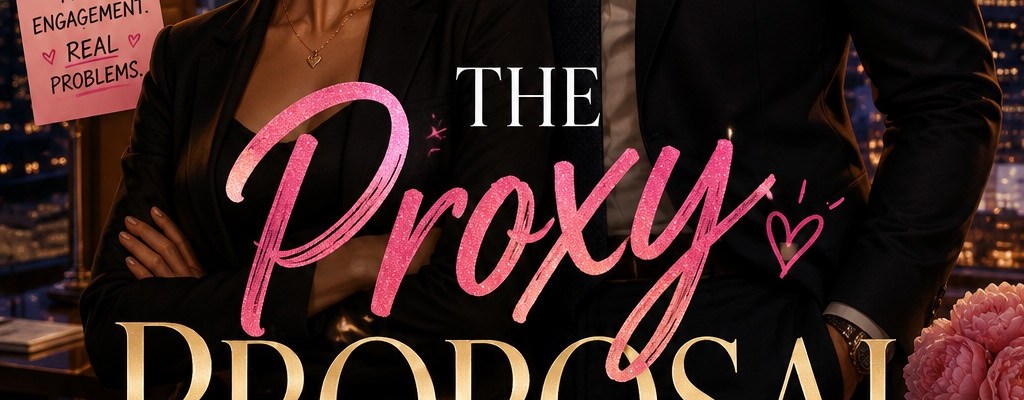
Chapter One
by: Roxanne Rene
At 4:47 PM, the intercom crackled. Graham Ashcroft’s voice, stripped of its usual preamble, cut through the office air. Chloe Bennett’s hand froze over her keyboard. She’d heard that particular roughness only twice in three years. Both times preceded disaster.
“Ms. Bennett.”
Not “Chloe.” Not the occasional dry “I need you” that prefaced ninety-seven percent of their interactions. Just her surname, formal and exposed, hanging in the climate-controlled air like a dropped stitch in an otherwise perfect garment.
Chloe’s eyes moved to the glass wall of Graham’s corner office. He was standing—wrong—and still jacketed—also wrong. By 4:47, the jacket should have been folded over the chair back with its usual geometric precision; Graham himself should have been settled into the cushion side of a Herman Miller Aeron. Instead, he just stood, destinationless—a state she had never witnessed in three years.
Now he stood with his hands clasped behind his back, a position Chloe had never observed in three years of employment. It made his shoulders look broader and somehow younger, like a junior analyst called into a meeting he hadn’t been briefed on.
She saved her calendar—two keystrokes, same as always—and collected the morning correspondence from her outbox. The stack had been getting thinner. She’d noticed. She’d adapted.
She crossed to his door through a corridor of gray—gray carpet, gray walls, gray sky pressing flat against the floor-to-ceiling windows—and felt her navy blazer, thrifted from a Queens estate sale, elbow-patched and slightly oversized, assert itself against the monotone like an argument nobody had asked for. One knock. At his “Come”, she entered.
There was no coffee smell, no cologne—just filtered air and the low electronics hum that meant the building was still breathing. Her gaze moved the way it always did in his office, cataloging: organizational chart, pen cup by color temperature, leather blotter at exact center. The blotter held a small velvet box, deep burgundy, sitting with the same geometric precision as everything else in the room. The difference was that everything else was supposed to be there.
Chloe’s eyes went to it before the rest of her caught up—the same automatic triage that had her reading a room’s power dynamics before she’d taken off her coat. She pulled her gaze to his face, where it belonged. Then, against her better judgment, back to the box. The burgundy velvet occupied the center of the blotter with an unnerving purpose, and she wished it didn’t, because precision she could dismiss, and this she could not.
Graham’s blue eyes, inherited from his father but without Walter’s warmth, met hers with an expression she’d never seen there before. Something between determination and its opposite. Graham Ashcroft, who scheduled uncertainty into fifteen-minute blocks, looked almost uncertain.
“Sit,” he said. Then, correcting himself: “Please. Sit.”
Chloe sat. She set the correspondence where she always set it—his left, parallel to the desk’s edge. Three years of his office had taught her the precise register of stillness it required: the stillness of a negotiator who had already decided her terms.
Graham’s throat worked. She watched it, fascinated despite herself. In three years, she had seen Graham Ashcroft negotiate hostile takeovers, dismantle incompetent executives with surgical precision, and deliver quarterly earnings reports with the emotional investment of someone reading a grocery list. He never broke protocol.
“I need to propose something,” he said. “Unorthodox. Professional, but requiring personal performance.”
Chloe’s eyebrows rose a millimeter. “You’re not firing me.”
“No.”
“You’re not promoting me.”
“Not precisely.”
“You’re standing like you’re about to ask me to hide a body.”
The corner of his mouth twitched—almost. Graham’s smiles were rare enough that she’d cataloged them: the polite social version, the genuine surprise version, the dry appreciation version that appeared when she’d delivered particularly sharp commentary. This was none of those. This was a malfunction in his facial programming.
“I need you to pose as my fiancée,” he said. “For a weekend at my parents’ estate in Marblehead. Four days, three nights. The summer charity gala is Saturday, and their expectations regarding my relationship status have become… difficult to manage through conventional means.”
Chloe stared at him. She counted the seconds automatically—one, two, three—her mind processing the words through multiple filters simultaneously. Prank? Unlikely. Graham didn’t prank. Psychological break? Also unlikely; his pupils were normal, his hands steady where they remained clasped behind his back. Genuine business proposal? The most disturbing option, because it meant he’d run the numbers and concluded that this was optimal.
“A fake fiancée,” she said finally. “What am I, a Hallmark reject?”
Graham didn’t laugh. He didn’t even register the joke as humor, which was itself informative. He moved to his desk—not sitting, never sitting, maintaining that strange standing tension—and slid a single printed page across the mahogany surface. It stopped precisely at the center of her field of vision, aligned with the desk’s edge, positioned for optimal reading.
Chloe picked it up. The paper was heavy stock, APP letterhead, formatted with the same section headers Graham used for acquisition briefs. She read:
PROJECT: DOMESTIC REPRESENTATION
OBJECTIVE: Temporary relational status verification
DURATION: 72 hours (Friday arrival – Monday departure)
COMPENSATION: $5,000 (gross), plus vehicle access
Below this, bullet points. Behavioral parameters. Timeline with fifteen-minute increments. A subsection titled “BACKSTORY ALIGNMENT” with three blank fields for her to complete.
Chloe’s thumb ran along the paper’s edge, feeling the slight ridge where the laser printer had fused toner to fiber. She’d handled thousands of Graham’s documents, but never one with her name in the subject line. Never one that proposed to rent her personhood by the hour.
“Your former fiancée,” she said, not looking up from the page. “Victoria. She created a situation that required closed-door meetings.”
Graham’s jaw tightened. It was the closest he came to visible vulnerability—a micromovement in the muscle beneath his ear, visible only because she’d spent three years learning to read his small print. “The dissolution was… complicated. My parents’ concern has escalated beyond what a casual girlfriend would satisfy. They require evidence of serious commitment. I require peace to focus on the third-quarter projections.”
“And you can’t just tell them you’re dating someone.”
“I’ve attempted that formulation. The response was insufficient.”
Chloe absorbed the word “insufficient,” a term from her own family history. Daniel had never treated her as anything but essential, and that responsibility had hollowed him out. The $5,000 was more than two months of his medical copays. She looked up from the brief and saw Graham shift his weight. For the first time, the man who calculated risk to four decimal places looked uncertain, waiting.
“That’s hers,” Chloe said. Not a question. She nodded toward the velvet box still sitting on the blotter, its corners perfectly aligned with the desk’s geometry.
Graham’s eyes followed her gesture. For a moment, something flickered—regret, perhaps, or calculation. “It was available.”
“Mm.” Chloe reached for the box. She didn’t open it immediately; she held it between two fingers, feeling its weight, its potential energy. Then she lifted the lid.
Princess cut, platinum band, the kind of ring selected from a catalog of acceptable choices rather than chosen. Chloe had seen it before, in the background of corporate event photographs, on Victoria Harrington’s hand at the holiday party three years ago when Graham had still believed in forever—or had been performing the belief, which with Graham amounted to the same thing.
She turned the box over. The ring stayed in its velvet cradle, indifferent to her inspection.
“Available,” Chloe repeated. She closed the box with a soft click and set it back on the desk, not in its original position but slightly askew, a deliberate disruption in Graham’s ordered world. “You want me to wear your ex-fiancée’s recycled ring and pretend to love you for seventy-two hours so your parents will stop asking questions.”
“That’s a reductionist framing.”
“It’s the accurate framing.”
Graham brought his hands from behind his back and set them on the desk, palms down, the way she’d seen him do when he was closing a deal. “Five thousand, as stated. The Tesla—Model S, fully charged—is yours from Thursday through Tuesday.” He straightened one of the papers on the blotter without looking at it. “Forty-eight hours’ notice on the itinerary. What I need from you is presence at the relevant events and something that reads, to a reasonable observer, as genuine.”
“Consistent relational performance,” Chloe repeated the phrase, letting the corporate jargon hang in the air. “You want me to act like I’m in love with you.”
“I want you to act like you’re engaged to me. The emotional content is adjustable within parameters.”
“And if I improvise?”
Graham’s eyes narrowed. “Improvisation carries risk.”
“Life carries risk, Mr. Ashcroft. You’re asking me to perform intimacy with someone who alphabetizes his spice rack. I’m going to need some creative latitude.”
“I don’t alphabetize my spice rack.”
“You would if you cooked.”
The almost-smile again, stronger this time. “Point conceded.”
Chloe stood, walked to the window, needing the distance to think, and looked out at Manhattan’s financial district spreading below like a circuit board designed by someone with anxiety issues. The Crownpoint Tower’s reflection caught in neighboring glass, all clean angles and controlled access, Graham’s philosophy made architecture.
She thought of the ring in its box. She thought of Victoria Harrington’s perfect chignon and perfect pedigree and perfect failure to make Graham Ashcroft anything other than precisely what he’d always been. Then came the other ghosts: the echo of her mother’s car pulling away for the last time, the memory of Daniel’s hollowed-out eyes as he handed her his last twenty dollars, the cold shock of lake water closing over her head when she was seven and no one was watching
“Five thousand,” she said, not turning from the window. “The Tesla. Full itinerary access. And I reserve the right to improvise within reason—meaning I won’t pretend to be someone I’m not. No performance of wealth. No faking opinions. No laughing at things that aren’t funny.”
“That last requirement may conflict with my father’s jokes.”
“Then your father will experience authentic silence.”
She heard Graham move behind her, the soft shift of his weight on carpet. “Agreed,” he said. “With one amendment. No personal disclosures that haven’t been pre-approved. The backstory requires alignment.”
Chloe turned. He was holding a second document, printed on identical heavy stock and formatted with his usual obsessive precision. Ground rules, section headers, behavioral parameters in bulleted lists. He extended it toward her with the formality of a treaty negotiation.
She took the document. It was a contract for pretending, all bullet points and behavioral constraints designed to eliminate the risk of genuine feeling. Her eyes scanned the familiar corporate formatting, moving faster than her conscience could object.
“You’re serious about this,” she said. Not a question.
“I’m always serious, Ms. Bennett. You of all people should know that.”
Chloe looked at him. Not the suit, not the posture—she’d cataloged those years ago. What she hadn’t indexed was this: a man who’d responded to heartbreak by inventing better paperwork. Who’d made a contract for intimacy because intimacy had once broken the terms.
She thought of Daniel, who had given up everything for her without a single contract. She thought of the way love, real love, had emptied him out until there was nothing left.
“One more thing,” she said. “The ring. I’m not wearing Victoria Harrington’s castoff like a hand-me-down prom dress. You want me to play a part, fine. But I won’t play the part of someone grateful for your leftovers.”
Graham’s expression flickered—surprise, she thought, or something adjacent to it. “I hadn’t considered—”
“Consider it now.”
He looked at the velvet box on his desk. For a moment, something like shame moved across his features, there and gone before she could confirm its presence. “The ring is… practical. It was available, as I said. Purchasing another would require time we don’t have, and explanations I can’t provide.”
“Then I’ll wear it on my right hand. Switch it to the left when your parents are watching. But I’m not pretending that thing belongs to me.”
“That compromises the—”
“That compromises nothing except your peace of mind.” Chloe set the ground rules down between them. “I’m not Victoria. I don’t know the right wine for the right fish, and I won’t pretend to.” She held his gaze. “You didn’t choose me because I was the best candidate. You chose me because I already know where the bodies are buried—professionally speaking. So you can have the real me, or you can have nobody. Those are the options currently on the table.”
She’d used his first name. She realized it as his eyes widened slightly, as the air in the office shifted around the unexpected intimacy. Three years of “Mr. Ashcroft” and “Ms. Bennett” and now this, her voice stripping away the hierarchy because the proposal had already destroyed it.
“Graham,” she said again, deliberately. “I’m your best option and your worst liability. Decide which one you can live with.”
He looked at her for a long moment. The digital wall clock ticked forward—4:52 PM, eight minutes remaining in the ordinary world. Then he reached for his pen, uncapped it with precise fingers, and made a notation in the margin of the ground rules document.
“Amendment noted,” he said. “Ring to be worn as specified. Authenticity within parameters.” He extended the pen toward her. “Sign, please. Both copies.”
Chloe took the pen. It was heavy, expensive, the kind of instrument that cost more than her monthly grocery budget. She signed her name where indicated—Chloe Bennett, smaller than his signature, more compressed, the handwriting of someone who’d learned to fit into limited space—and watched him do the same on his copy.
“Thursday,” he said, gathering his documents. “I’ll have the Tesla delivered to your building. The itinerary will be in your inbox by Wednesday evening.”
“And the ring?”
Graham paused. He looked at the velvet box, then at her, and something in his expression suggested he was seeing her for the first time—not as an extension of his efficiency, but as a separate person with separate gravity.
“Keep it,” he said. “Get accustomed to it. The weight, the feel. It needs to look natural.”
“Poetry, Mr. Ashcroft?”
“Practicality, Ms. Bennett. The performance requires preparation.”
Chloe took her copy of the agreement, folded it once along its existing crease, and tucked it into the pocket of her thrifted blazer. The paper bulked against her hip, a tangible reminder of the deal she’d struck. She picked up her bag, slung it over her shoulder, and walked to the door.
She paused there, hand on the handle, and looked back. Graham had returned to his window, his posture restored to its familiar rigidity, but the velvet box remained on his desk. The diamond caught the last of the afternoon light and threw it toward her in scattered fragments, cold and brilliant and full of other people’s promises.
“Four days,” she said. “Three nights. Try not to fall in love with me, boss. I’m expensive.”
She closed the door without waiting. Behind her desk again, she pulled up her calendar and found it exactly as she’d left it—color-coded, annotated, each hour already spoken for. She smoothed the pocket of her blazer once, feeling the folded paper there, and then moved her hand to the mouse.
The money was the reason. She could enumerate it: the Tesla, the five thousand, the itinerary access. Clean reasons, sufficient reasons. She opened the first unread email and typed, and if some part of her was already cataloging the things she didn’t know about Graham Ashcroft—what he looked like when he laughed without meaning to, whether he ever did—that was simply her professional thoroughness. Preparation for the role.
At 4:59 PM, Chloe shut down her monitors. At 5:00 PM exactly, she stood, gathered her things, and walked to the elevator without looking back at the glass wall of Graham’s office.
She did not need to look. She already knew: the velvet box open on the desk, the ring inside it, and Graham Ashcroft standing over both of them like a man reviewing a budget that refused to balance.


One thought on “The Proxy Proposal: A Contemporary Romance: Chapter One”